


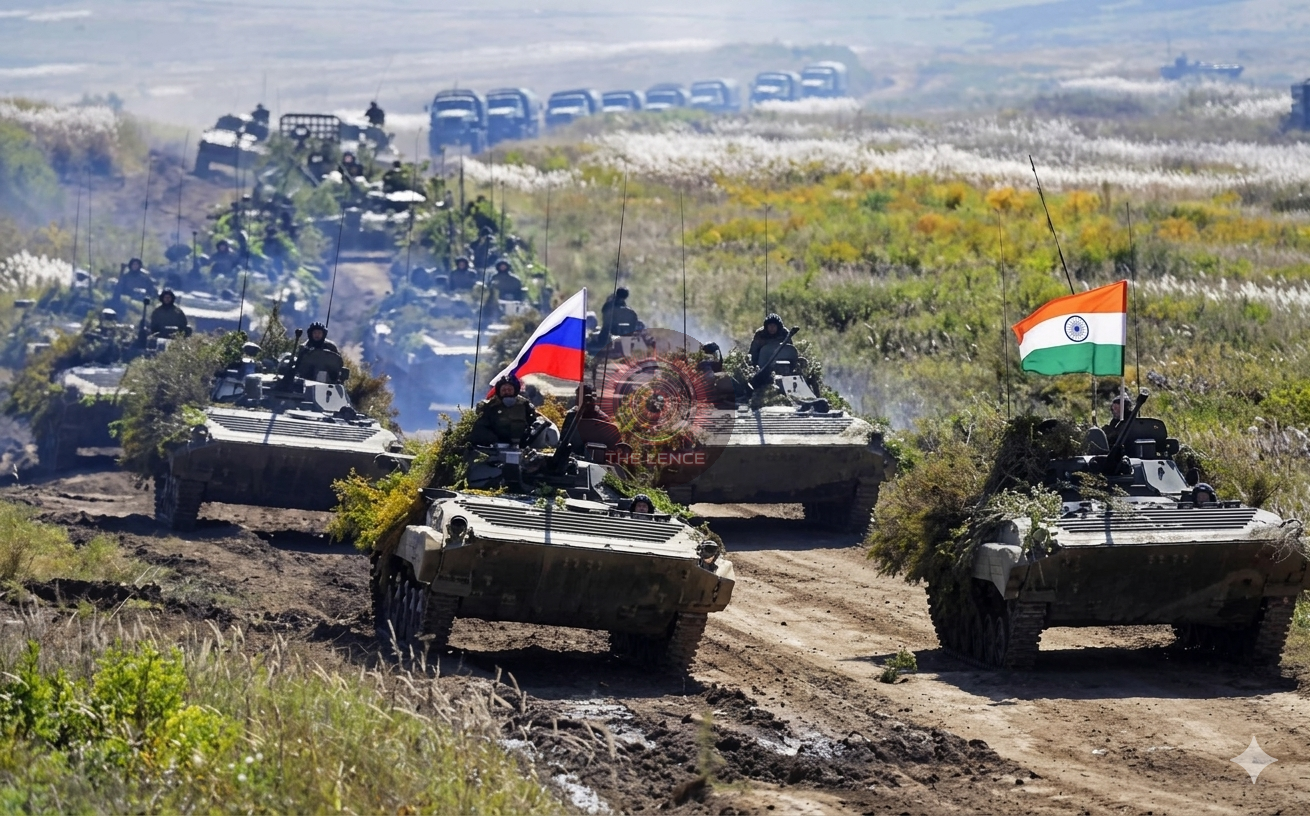
India and Russia have reportedly moved forward with a key defence agreement that allows both countries to station military personnel and assets on each other’s territory—marking a significant evolution in their long-standing partnership.
The arrangement permits each nation to deploy up to 3,000 troops, alongside a limited number of naval vessels and aircraft, under mutually agreed conditions. While such cooperation frameworks are not entirely new, the inclusion of troop deployment adds a deeper operational dimension that reflects growing trust and coordination between the two sides.
At its core, the pact is designed to improve military logistics and readiness. It enables access to bases, ports, and airspace, allowing forces to refuel, resupply, and carry out maintenance far from home territory. This kind of access can be crucial during joint exercises, humanitarian missions, or rapid response operations.
Strategically, the agreement comes at a time when global alliances are shifting and major powers are strengthening defence ties. For India, it reinforces its approach of maintaining diverse military partnerships while safeguarding its strategic autonomy. For Russia, it offers expanded reach into regions where India has a strong presence, particularly across key maritime routes.
The move also signals a broader trend toward closer military interoperability between the two nations. By enabling personnel and assets to operate from each other’s territory, both sides gain valuable experience in coordination, planning, and execution under shared frameworks.
While the agreement does not necessarily imply permanent deployments or a formal alliance, it provides both countries with greater flexibility in responding to emerging security challenges. As geopolitical tensions continue to shape international relations, such partnerships are likely to play an increasingly important role in defining regional and global power dynamics.


Comments (0)
No comments yet. Be the first!
Leave a Comment