


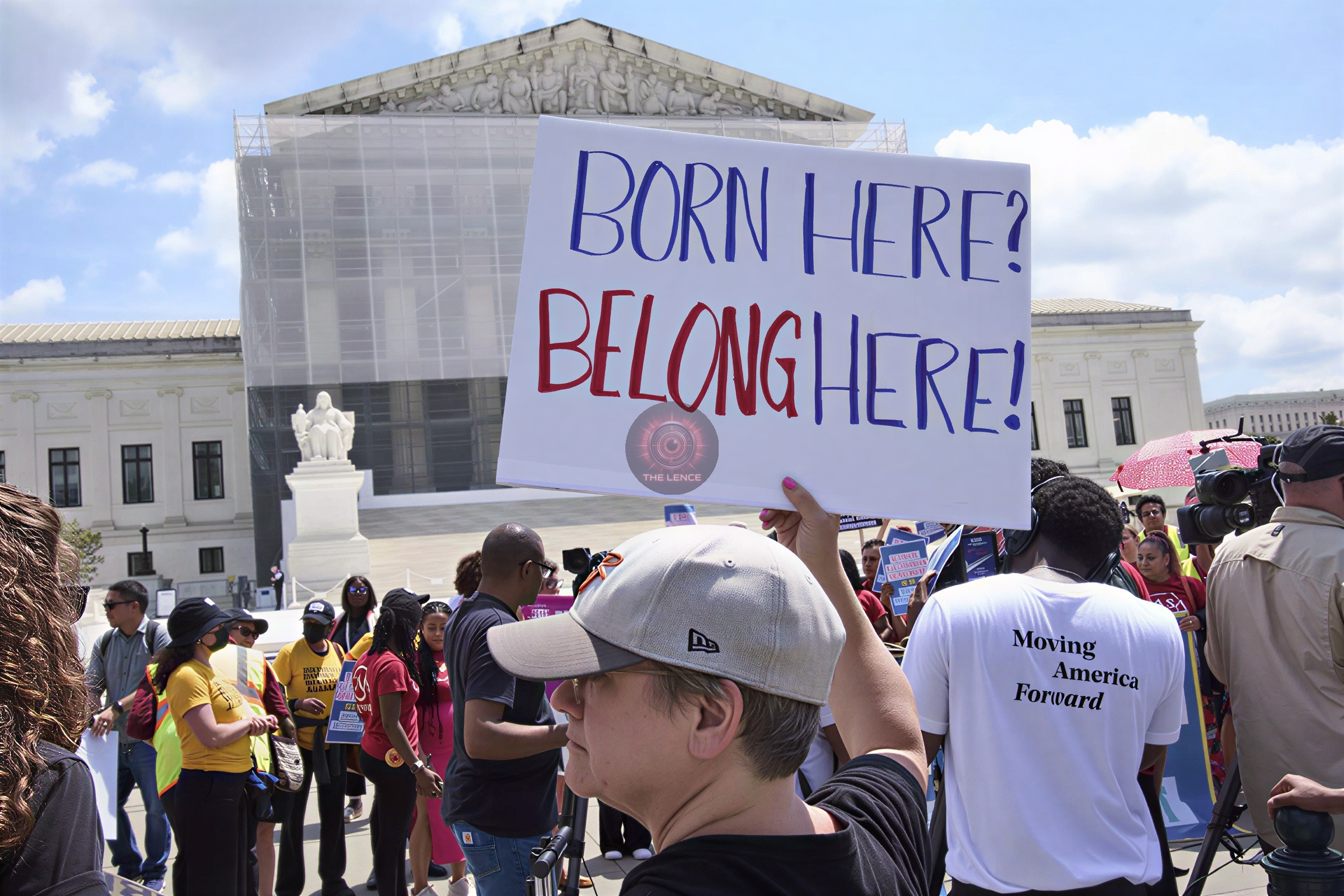
The Supreme Court and the Birthright Citizenship Debate
The United States Supreme Court is currently grappling with a significant case regarding birthright citizenship, a principle that has been a cornerstone of American identity for over a century. This legal battle raises fundamental questions about the interpretation of the 14th Amendment and the future of citizenship in the U.S.
A Complex Legal Landscape.
Justice Brett Kavanaugh, during the previous year's oral arguments, highlighted the potential complexities and logistical nightmares that could arise should President Donald Trump’s executive order to end birthright citizenship be implemented. His pointed questions revealed the depth of the practical challenges that federal and state agencies would face, such as changing how newborns are processed and how citizenship is determined without relying solely on birth certificates.
The 14th Amendment and Historical Context
At the heart of the debate is the 14th Amendment’s citizenship clause, which grants citizenship to "all persons born" in the United States who are "subject to the jurisdiction thereof." The current arguments focus heavily on the phrase "subject to the jurisdiction," with both sides presenting differing interpretations of the framers' intent. The Trump administration contends that the amendment was meant to confer citizenship only to freed slaves and their descendants, not to individuals temporarily in the country.
Implementation Challenges.
If Trump's order were to take effect, it would necessitate considerable changes in how citizenship is documented and verified. Federal agencies have prepared guidance documents to address these changes, but these documents have often resulted in more questions than answers. For instance, the requirement for officials to verify parental citizenship could lead to a bureaucratic quagmire, considering the volume of births annually in the U.S.
Potential Impact and Criticisms.
Critics argue that the order would transform the essence of U.S. citizenship from one based on birthplace to one based on parentage, a shift that would fundamentally alter the American ethos of equality and opportunity. This change could align the U.S. more closely with other countries that base citizenship on lineage rather than geography, a move seen by some as a departure from the founding principles of the nation.
Current Legal Proceedings.
The Supreme Court's current deliberations follow a previous ruling that blocked the implementation of the order on a temporary basis. The justices are now set to make a decision on the legality of the order itself, with significant implications for millions of Americans. The court's ruling is anticipated by the end of June, and it is likely to have lasting impacts on the definition of citizenship and the legal framework surrounding it.
Global Comparisons.
In defending the order, the Trump administration points to other countries that have similar citizenship systems, suggesting that such a model is feasible. However, the U.S.'s unique historical and cultural context makes the debate particularly contentious and complex.
Conclusion.
The Supreme Court's decision on this issue will not only affect the current administration's policies but will also shape the future of citizenship in America. As the justices weigh historical intent, practical implementation, and constitutional principles, the outcome will undoubtedly be a significant moment in U.S. legal and social history.



Comments (0)
No comments yet. Be the first!
Leave a Comment