


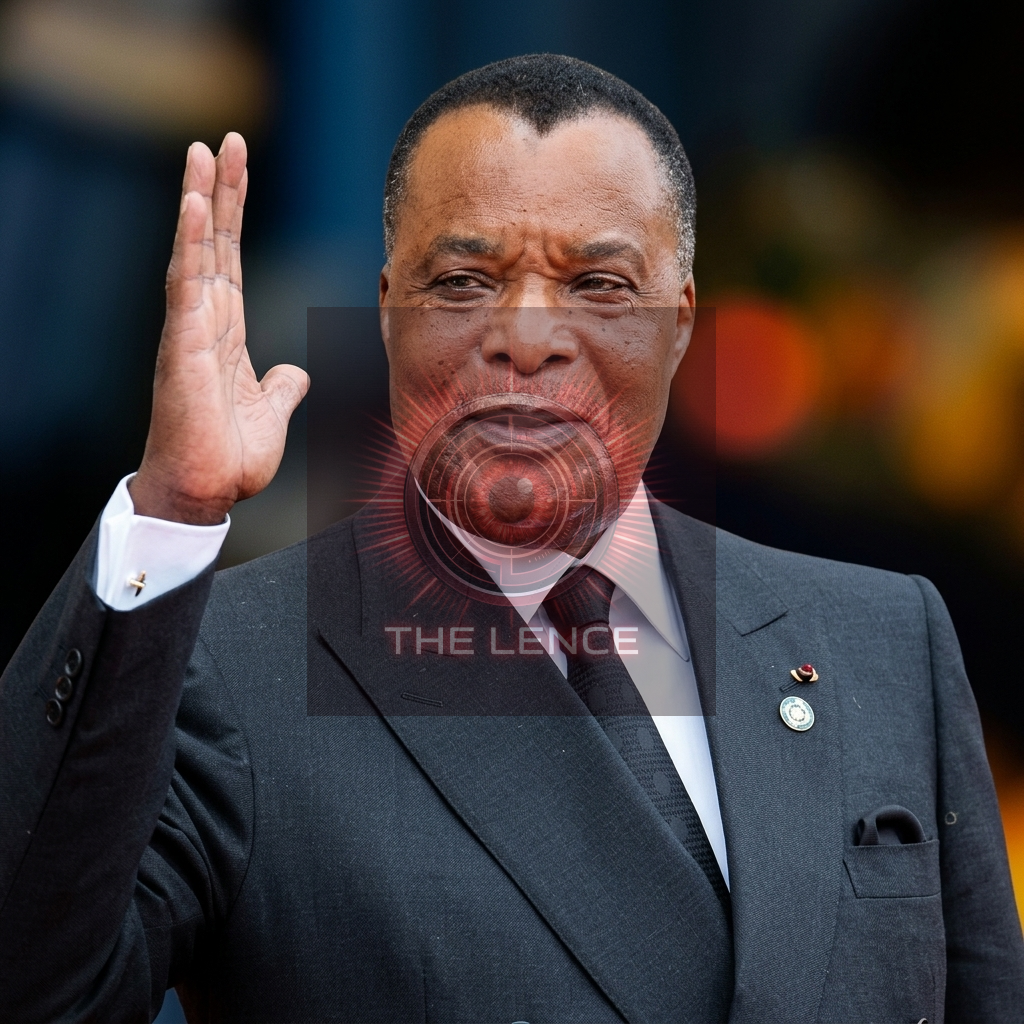
The Republic of Congo has witnessed another significant political event with the re-election of President Denis Sassou N’Guesso for a fifth consecutive term. According to provisional results announced by the authorities, Sassou N’Guesso secured 94.82% of the vote, as reported by Interior Minister Raymond Zephirin Mboulou on state television.
Election Overview.
Sassou N’Guesso, who is 82 years old, faced competition from six other candidates. Despite the challenge, he maintained his position as the leader of this Central African country, which is notable for having one of the largest oil reserves in sub-Saharan Africa. The election process was marked by an internet shutdown across the nation, a common practice during elections, alongside restricted traffic in the capital.
Voter Turnout and Election Atmosphere.
The interior minister claimed a voter turnout of 84.65%, with 2.6 million ballots cast. However, many polling stations in Brazzaville, the capital, experienced short or non-existent lines. This lack of voter enthusiasm reflected a prevalent sentiment among locals that the election would not lead to a change in leadership, considering Sassou N’Guesso’s 42-year rule.
Political Background.
Sassou N’Guesso represents the Congolese Party of Labor and first ascended to power in 1979. He initially ruled until 1992, when he organized the country’s first multi-party elections. After a brief period out of office, he returned to power as a militia leader following a civil war in 1997.
During the campaign, there was a noticeable disparity between Sassou N’Guesso and his opponents. He was the only candidate who traveled extensively across the country to garner support, and his presence was overwhelmingly visible throughout Brazzaville, where roads were adorned with his effigies. Notably, two major political parties chose to boycott the elections, citing concerns over electoral fairness.
Constitutional Changes and Economic Challenges.
A pivotal constitutional referendum in 2015 eliminated presidential age and term limits, thus enabling Sassou N’Guesso to extend his tenure. The Republic of Congo is currently grappling with significant economic challenges, including a high international debt level, recorded at 94.5% of its GDP by the World Bank. Additionally, the nation faces severe unemployment rates among its youth, with over half of its 5.7 million citizens living in poverty, and 47% of the population under 18.
Context in African Politics.
This election underscores a broader pattern of aging African leaders extending their time in office. Sassou N’Guesso is the third-longest-serving African president, following Cameroon’s Paul Biya and Equatorial Guinea’s Teodoro Obiang Nguema Mbasogo. His re-election raises questions about the future direction of the Republic of Congo and its governance.

Comments (0)
No comments yet. Be the first!
Leave a Comment