


UN Approves Ghana-Led Resolution on Slavery as Crime
Against Humanity.
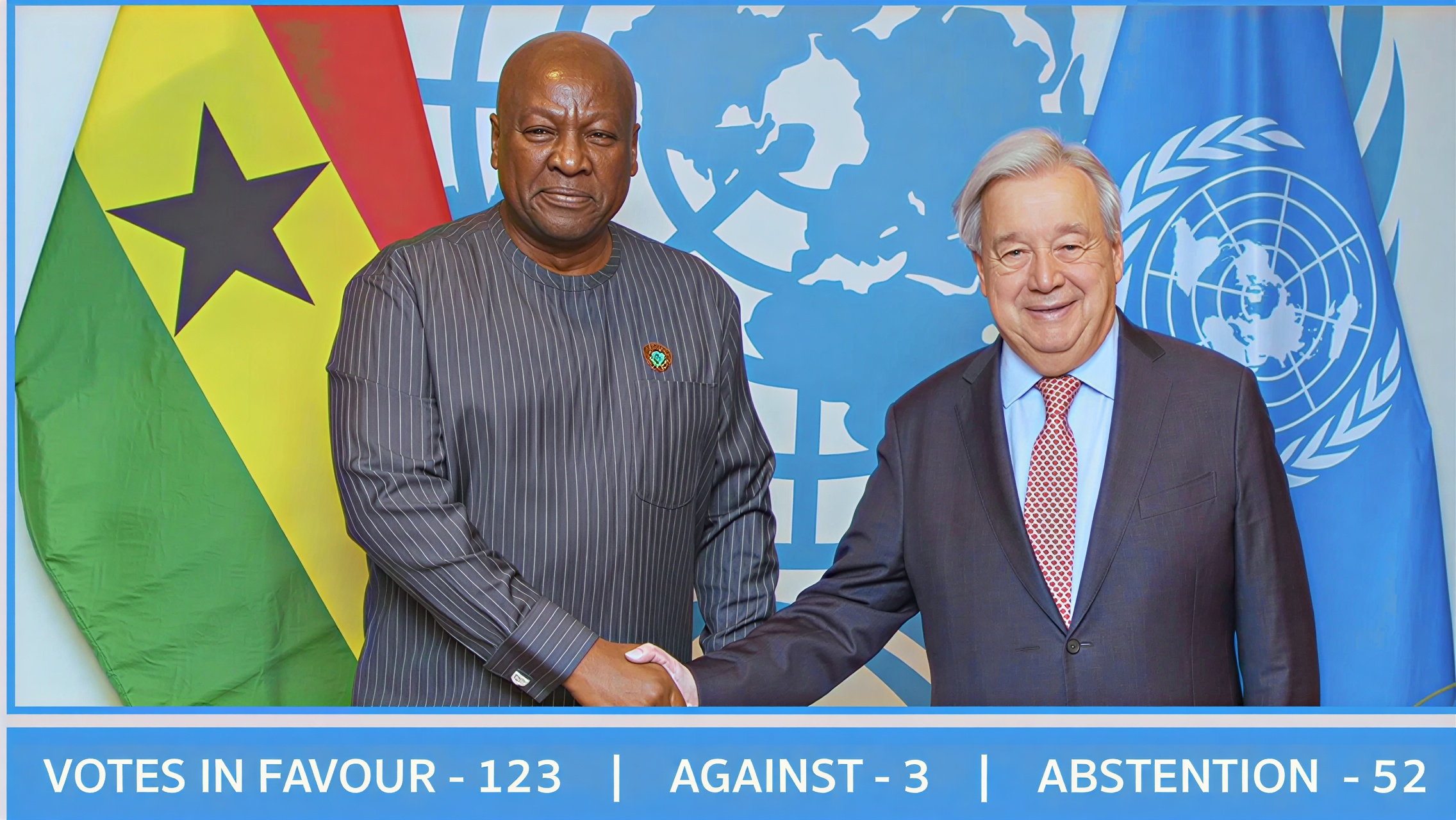
The United Nations General Assembly has made a historic move by approving a landmark resolution that officially declares slavery and the transatlantic slave trade as crimes against humanity. Spearheaded by Ghana, under the leadership of President His Excellency John Dramani Mahama, the resolution also calls for reparations to address the lasting impacts of these atrocities.
A Diplomatic Victory for Ghana.
The resolution, which passed with 123 votes in favor, 3 against, and 53 abstentions, represents a significant diplomatic success for Ghana. It highlights the growing global momentum to address the historical injustices of the slave trade and their enduring legacies. The resolution acknowledges the transatlantic slave trade as a horrific tragedy that resulted in centuries of suffering, violence, and economic exploitation for millions of Africans and people of African descent.
Addressing Historical Wrongs.
Central to the resolution is the demand for reparatory justice. It calls on former slave-trading nations to engage in meaningful dialogue with African states and the African Union to address historical wrongs. While it does not specify a particular mechanism for reparations, the resolution urges member states to take concrete steps toward atonement. These steps may include financial compensation, debt cancellation, development assistance, and the return of looted cultural artifacts.
Ghana's Leadership and Global Support.
Under the leadership of President John Mahama, Ghana’s delegation played a pivotal role in the diplomatic push for the resolution. The outcome is seen as a historic step in the long struggle for recognition and justice. Ghana’s Foreign Minister, Samuel Okudzeto Ablakwa, praised the resolution as a “moment of truth” for the international community, stating, “Through this resolution, the world has spoken the truth. We can't change history, but we can change how it is told going forward.”
The resolution garnered broad support from across Africa, the Caribbean, and other regions with significant populations of African descent. Caribbean nations, which have long championed the cause of reparations, joined Ghana in rallying support for the measure.
A Turning Point for Reparations.
Following the vote, representatives from several African and Caribbean nations celebrated the outcome, framing it as a turning point in the global conversation on reparations. Proponents argued that the resolution shifts the debate from abstract acknowledgment to actionable demands for justice, establishing a clear moral and political imperative for former colonial and slave-trading powers to reckon with the past.

Comments (0)
No comments yet. Be the first!
Leave a Comment