


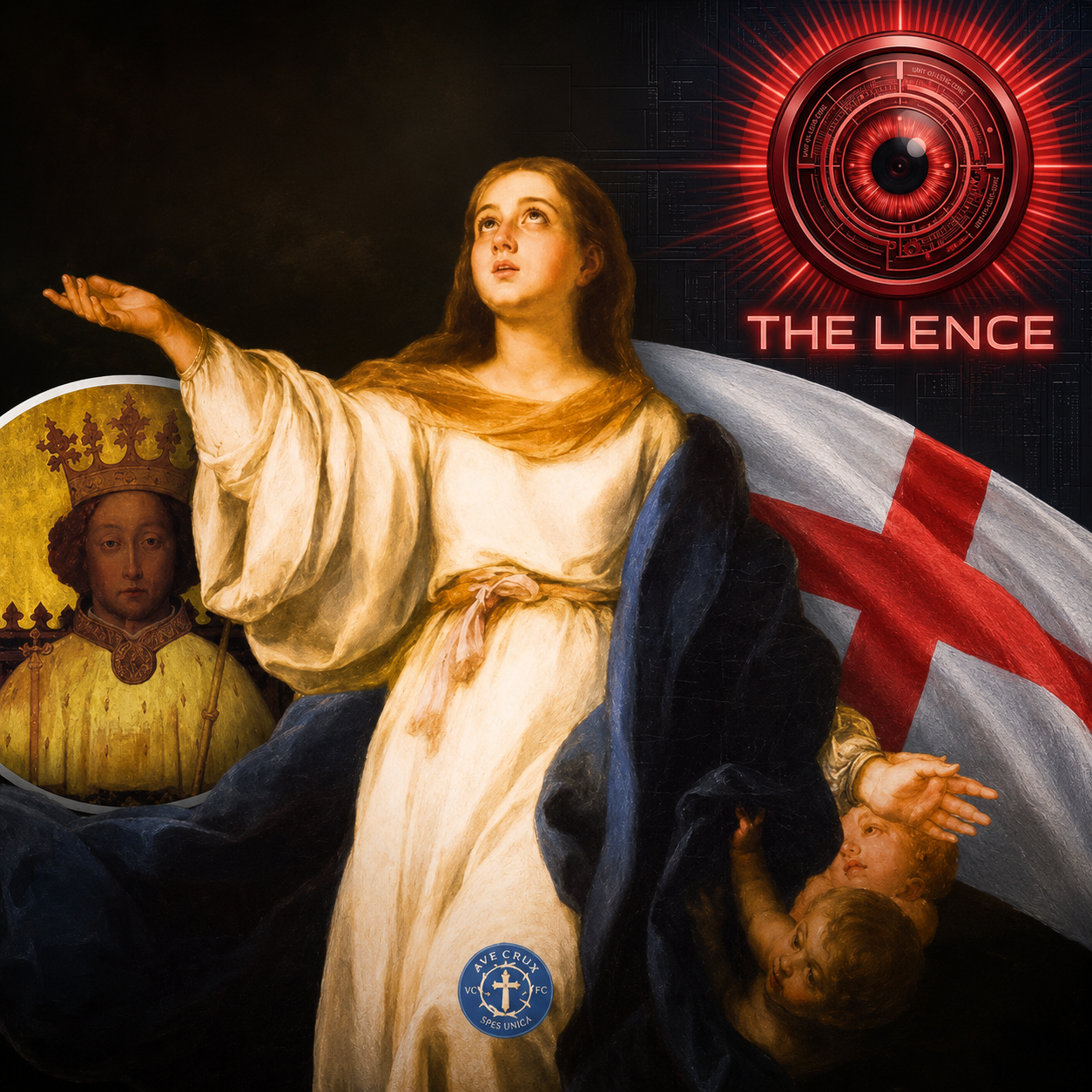
In 1381, King Richard II dedicated England to the Virgin Mary at Westminster Abbey, in thanksgiving for the saving of his kingdom during the Peasants' Revolt.
According to tradition, the title goes back even further, to Saint Edward the Confessor.
A famous painting of the dedication carried the words: "This is your Dowry, O pious Virgin." The Wilton Diptych in London's National Gallery, painted around 1395, symbolises the offering: Richard II kneels before the Virgin and Child while an angel holds the banner of the Cross of Saint George, its staff topped by an orb bearing a tiny map of England.
For centuries, England was known across Europe as the Dowry of Mary.
In 1399, Thomas Arundel, Archbishop of Canterbury, proclaimed: "We English, being the servants of her special inheritance and her own dowry, as we are commonly called, ought to surpass others in the fervour of our praises and devotions."
Pilgrims poured to the shrine of Our Lady of Walsingham, known as England's Nazareth, until the Reformation destroyed the shrine and the memory began to fade.
But the title was established by royal act, and it has never been rescinded by any monarch or parliament. On March 29, 2020, the Catholic bishops formally rededicated England as the Dowry of Mary, with the faithful joining from homes and cathedrals across the country.



Comments (0)
No comments yet. Be the first!
Leave a Comment